

Ever wonder why it is that 90% of millionaires are in Real Estate? And this is no coincidence — it’s a tried and true wealth-building formula that self-made millionaires have known for millennia. Real estate provides something few investments can: steady cash flow, long-term appreciation, the ability to easily leverage assets and financial security.
Unlike so many financial schemes, real estate allows people to accumulate wealth slowly and safely over the years. A lot of new investors believe you need to have a ton of money or be some type of expert to invest in property, but at the Bargain Hunter, we believe most millionaires started small and learned on their way up – just like anyone else.
This post will detail why the rich buy real estate in order to generate more millionaires and provide beginners five simple steps they can follow if they want to start investing with nothing. If you want to create wealth and financial independence that lasts, real estate can be a great place to begin.
- Why Do 90% of Millionaires Invest in Real Estate?
- How Real Estate Creates Millionaires:
- Common Myths About Real Estate Investing:
- The 5-Step Real Estate Blueprint for Beginners:
- Step 3: Learn the Basics of Real Estate Investment
- Step 4: Use Smart Financing (Leverage):
- Real Estate Mistakes Beginners Must Avoid
- Real Estate vs Other Investments (Quick Comparison):
- Can You Become a Millionaire With Real Estate in USA?
- How to Start real State business today us a beginners:
- Final Thoughts 💭:
Why Do 90% of Millionaires Invest in Real Estate?

Millionaires don’t pick investments at random — they select their assets with a focus on long-term stability, predictable income and steady growth. Real estate is the ideal investment because it meets all these criteria, which is why real estate remains one of the best ways to build wealth.
Stable Wealth Creation
Real estate is a physical asset and typically appreciates over time. Unlike volatile securities prices, which can fluctuate significantly in a short period of time and are unpredictable in the short term but relatively predictable over the long term, property values generally just move up with very little downside risk in the long run, making real estate a dependable way to preserve and increase wealth.
Cash Flow vs Appreciation
Real estate has two potential sources of return: monthly rental income and property appreciation. Even if prices grow slowly, rental income offers steady earnings, which can enable investors to accumulate wealth while holding the asset.
Protection Against InflationInflation
leads to an upward movement of rent and property prices, though loan EMI is mostly a fixed cost. This enables investors to defend the purchasing power and accumulation of real wealth.
Real Estate vs Stock Market
The stock market can provide high returns — but also lots of volatility. Real estate meanwhile provides relatively low risk, tangible ownership and predictable income – a favourite among longtime millionaires.
How Real Estate Creates Millionaires:
Real estate makes millionaires — and it’s not just because of the steady income you can make by renting out an investment property. Unlike most assets, property is not only making you money every month, but is also increasing in value over time.
First, Passive trading to the bank is a HUGE factor here. If you have a rental property, tenants are paying rent each month. Loan payments and expenses are then deducted from this income, leaving any remaining proceeds as profit. Rent goes up over the years and your income grows without having to do anything extra.
Second, it is leverage that makes real estate powerful. Investors are applying for bank loans to make 10 percent down payment offers on homes. Although the bank contributes the vast majority of funds, you retain full ownership of the entire property value, and can build wealth more quickly.
Third, real estate is long-term wealth-building strategy. Usually, assets get more expensive over time and become worth a lot of money on a long enough timeline.
And finally, there are tax benefits that allow millionaires to save money. Interest, depreciation and expenses are deductible from tax so less is paid and the total return is higher.
Common Myths About Real Estate Investing:

Most people never get started in real estate investing because of common misconceptions. Such myths can cause fear and confusion, especially for newbies to the sport. Let’s separate reality from myths.
Myth 1: Only rich people have real estate. In fact, most millionaires who made their own fortunes didn’t begin wealthy. They started with inexpensive properties and borrowed from home loans. Real estate is where ordinary people go to gradually build wealth.
Many people have misconceptions about investing One is that you need to tenure’s literally thousands, if not millions, of dollars away in order to invest them. Housing also requires some capital, but you don’t have to pay the full price up front. Bank loans, partnerships and smart planning allow one to start with minimal savings.
Many also believe property is too risky. Real estate is more stable than stocks or speculative investments. While property prices can go up and down, they very seldom fall to zero because real estate is a physical asset that carries intrinsic value.
The truth is, it’s not the real estate that becomes risky; it’s the investor who buys without knowing. With due diligence, wise choices of place and great distance logic, real estate will remain one of the surest ways to build ones wealth.
The 5-Step Real Estate Blueprint for Beginners:
You don’t just stumble into real estate success; you need a game plan. The following beginner real estate investment guide will help persons new to real estate investments know exactly how to start investing in real estate and avoid some of the common mistakes made while building lasting wealth. Every step is about down-to-earth actions – whether you are experienced or capital-constrained.
Step 1: Build the Right Millionaire Mindset
As such, building a steadfast mindset is paramount before putting your hard-earned capital to work when investing in real estate. Millionaires think differently than the middle class about money, risk and time — and every investment decision reflects this.
An employee mentality is centered on a fixed income and short-term security. Workers trade time for money, and tend not to take on risk at all. Insverely, the psychology of an investor is to accumulate assets that produces income for the long term. Investors realise that the money should work for them rather than the other way round.
Real estate is about the long game. Property wealth doesn’t spring up in a matter of months, but over years. Millionaires invest in property with patience, allowing rental income and appreciation to build up over time, rather than seeking fast returns.
Risk is not shunned — it’s mitigated intelligently. Savvy investors mitigate risk by investing in the right location, studying cash flow rates, not remaining short of capital and making emotional decisions. When adequately understood and managed, real estate risk is not reckless — it’s manageable.
Step 2: Start Small but Start Early
One of the biggest mistakes I see beginners make is waiting to have the “money” to begin. The fact of the matter is, doing so — even with a small property — makes an important difference over time. Your real estate wealth grows slowly, which means the sooner you start, the quicker your investments can begin to work for you.
For someone new, small sized residential properties like 1BHK flats and 2BHK houses are usually the best starting point. They are simply easier to deal with, don’t require heaps of capital and attract stable renters. As you earn more and gain confidence, you can move on to bigger residential or commercial properties.
Comparison between residential and commercial properties When comparing residential vs commercial property, then popular opinion would say that residential investing is straight forward and less risky, commercial real estate can be more rewarding but also needs experience to manage. Start with stability if you’re new to it all.
For beginners in India, the best choices would be ready-to-move-in flats in developing cities, affordable housing projects and places near educational institutions or business hubs. Such properties typically supply a stable source of rental income and appreciate in value.
One thing to take away: Start small and learn the process, then scale slowly. Early action trumps waiting for the perfect conditions.
Step 3: Learn the Basics of Real Estate Investment
Perhaps the most important thing you can learn before investing is real estate 101. Knowing the fundamentals can help you make good choices and prevent costly mistakes.
Understand Rental Income
Rental income is the payment you receive for allowing someone to live or work in your property. In the early days, this is often the lifeblood of a business. By earning consistent rental income, you can service your loan EMIs and maintenance charges, and further earn those profits.
Know How Appreciation Works
The appreciation is the value of a property or capital good over time. Location gives the demand for properties, this also determines why prices move up with the availability of infrastructure and economy growth. This extended increase can translate into a serious shot in the arm for your wealth.
Understand Important Financial Metrics: ROI, Cash Flow and Cap Rate
ROI (Return on Investment): How much profit your property brings you relative to its cost.
Cash Flow: The amount that remains after paying expenses (loans, repairs, taxes) with rental income. Positive cash flow is essential.
Cap Rate: Determines the potential return of a property based on its income and cost.
Knowing these stats in your marketplace gives you a way to determine what makes a property worthy of your investment.
Importance of Location
Location is the most important thing in real estate. It may also be that properties in growing regions, near business centres or close to schools and transport appreciate at a faster rate of knots and attract a better class of tenant. Even a small property with great location can outperform a larger property with bad location.
The lesson here: Start by mastering these basics. Rental income, appreciation, the right metrics and local knowledge are the basis of successful real estate investing.
Step 4: Use Smart Financing (Leverage):
One of the best secrets in real estate is leverage, or using borrowed money as a way to increase your potential for investment. Good use of borrowing will allow you to get into bigger properties more rapidly and speed up your wealth creation.
Home Loan vs Investment Loan
Home loan is generally used for acquisition of self-occupied home property which can have ridiculously lower interest rates and part of the EMI amount paid may give you tax benefits under sections like 80C in India. An investment or commercial property loan is designed for properties that you rent out, and these often have slightly higher interest rates. Understanding the difference allows you to select the appropriate financing for your investment objectives.
Cover EMI with Rental Income
So, let’s here focus on one vital approach – How to use rental income to pay EMIs. If, for instance, you are paying monthly EMI of ₹25,000 and the property is generating rent income of ₹30,000, your loan is being self-serviced while you pocket the profit. This way, your investment can continue compounding without adding extra pressure to your budget.
Smart Bank Financing Tips
People should shop around for interest rates and loan terms offered by different banks before deciding, she said.
Prefer pre special offer options to save on interest cost over the long run.
Maintain contingency fund to pay EMIs in case of periods of vacancy.
Start small—don’t over-leverage your finances.
Smart financing enables newcomers to get into real estate early and invest small initially, building a portfolio slowly while minimizing risks.
Step 5: Scale & Build Multiple Income Streams
Once you have your first property bringing in rental income and growing in value, the logical next step is to add more — and grow your wealth over time. Millionaires don’t own one property, they create several income streams from a central investment.
From Building One To Multiple Properties
And while your initial property continues to provide you with consistent cash flow, you can use the profit, equity or loan-paying ability to invest in new properties over time. This technique lets you build up your portfolio gradually without requiring a hefty up-front investment.
Reinvest Profits
One of the fundamental formula followed by wealthy inverstors is :
Rental Income + Capital Gains on Sale = Investment for Next Property
Instead of paying your profits out, the reinvestment of capital means that you’re able to buy more property – building income and assets in addition.
Build a Long-Term Portfolio
Choose diversity in properties within growth locations to minimise all risks. If you can, incorporate a variety of residential and commercial spaces, and maintain eyes for the long term. There is a better way, the portfolio method, which brings steady cash flows, higher returns and financial security over decades.
One Smart Thing: Scaling and going again Turn one single investment into several properties that provide a steady passive income and long-term wealth, the fundamental strategy of most millionaires.
Real Estate Mistakes Beginners Must Avoid

But even with the right mindset and strategy, beginners can make missteps that hinder the growth of wealth. Step around these frequent mistakes and you’ll save time, money and unwelcome drama.
Emotional Buying
A lot of newbies buy properties they themselves would like rather than what is best investment wise.” Investing in a property because it “looks nice” or feels right can result in poor returns. Never buy with emotion, always look at the cash flow, location and potential growth.
Poor Location Selection
It’s all about location when it comes to being successful in real estate. Simpler yet, a location that’s not ideal for attracting tenants and one where prices will grow more slowly. Make sure to always research infrastructure, demand, amenities and future growth before purchasing.
Ignoring Cash Flow
Some investors all they think about is the appreciation of a property and not rental income. Cash in hand is must for EMIs, tax and maintenance. Without it, a high-value property can be a financial weight.
Skipping Legal Verification
And legal problems could wipe out your investment. Before buying, always check property titles, approvals and documents. Not having performed this step could lead to disagreements, penalties or even loss of investment.
Takeaway:
Don’t make emotional decisions, know which area to invest in, prioritize cash flow and always get legal documents checked. These are essential first steps to creating safe and lucrative real estate wealth.
Real Estate vs Other Investments (Quick Comparison):
Newcomers to wealth-building often ask: “Which is better, real estate or investing in stocks or mutual funds?” Each weapon comes with its own set of pros and cons, but knowing the differences can help you make better choices.
Real Estate vs Stocks
Real Estate: Supplies physical property, monthly revenue and appreciation over time. It’s more stable and lets you get leverage from bank loans in order to accumulate wealth.
Stocks: Good for high returns fast, but highly volatile. Stocks can plunge unexpectedly, and short-term investments are riskier.
Real Estate vs Mutual Funds
Mutual Funds: Diversified portfolios under professional management. They are more liquid than property but don’t yield a physical asset or direct control.
Real Estate: This requires more work and research but offers direct ownership, rental income and tax benefits.
Which is Best for Beginners?
They added that real estate, for beginners looking for long-term wealth and passive income, is generally more predictable and safer. Stocks and mutual funds may help to augment your portfolio, for example, but they tend to work better after some experience or as part of a diverse investment strategy.
Key learning: Real estate provides stability, cash flow and appreciation which are more preferred by most for beginners who want to build wealth step-by-step.
Can You Become a Millionaire With Real Estate in USA?

Sure, real estate in the United States has made millionaires out of a lot of people over time. With the property market remaining stable, clear-cut regulations and credit facilities in place, there is an abundance of investment opportunities for both beginners and proficient investors in the US.
USA Market Opportunities
Rapidly expanding cities such as Austin, Dallas, Miami and Charlotte are driving high demand for residential and commercial real estate.????????Rental properties, vacation houses, multi-units- all offer regular cash flow and long-term value. You can even invest in real estate without having to worry about managing the properties directly through real estate investment trusts (REITs).
Real Examples
Many of the self-made millionaires in this country got their start with one rental house or small multi-family building. They added more properties over time and reinvested profits into new ones, to develop multiple income streams. It’s the same old lesson: Start small, leverage wisely and concentrate on appreciation and rental income.
Timeframe Expectations
The construction of real estate-based millionaire wealth in the USA – tends to require a decade or two of disciplined investing. Getting in early, reinvesting regularly, and selecting cities that are growing can help speed things along but patience and long-term vision are both required.
Takeaway: US real estate is one of the most accessible paths to wealth – it provides cashflow, cheap financing and appreciating assets that make millionaires out of ordinary people.
How to Start real State business today us a beginners:
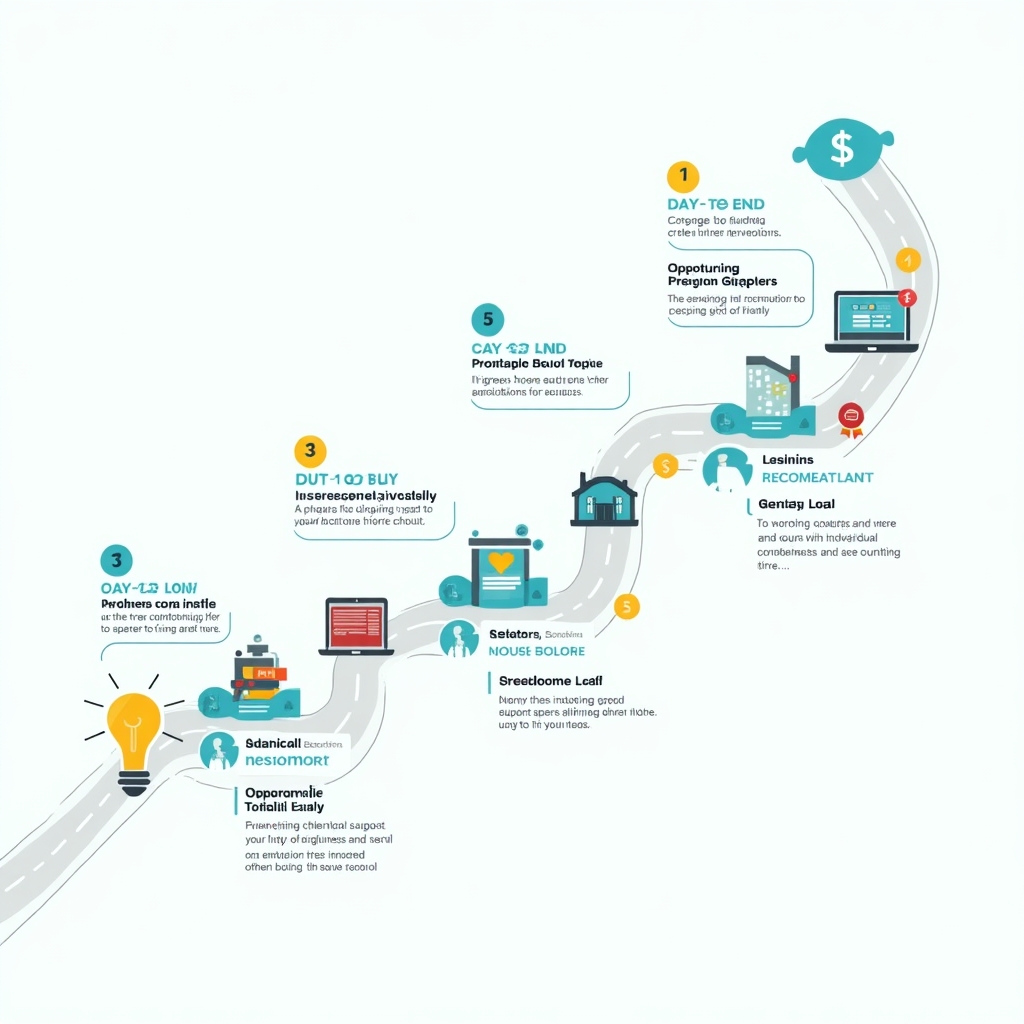
Beginning your real estate journey doesn’t need to be intimidating. Simply follow along this organised 30-day journey and you can quickly start investing in property to turn build wealth.
First 30 Days Roadmap
Week 1: Explore the market — assess locations, types of property and prices.
Week 2 Decoding your options – compare home loans, investment loans and interest rates.
WEEK 3: The basics of investment — rental income, cash flow, ROI and appreciation.
Week 4 Cup: Make a shortlist of potential properties; set a budget. Start reaching out to to real estate agents and mentors.
Build Skills and Knowledge
Real estate is your game, and knowledge is power in this game. Do online courses, read books, travel to webinars and keep up with what’s happening in the marketplace. So, learn how to analyze properties and calculate returns and evaluate risks before you invest.
Networking Matters
Strategize with other investors, agents and property managers to hear lessons learned, grab early opportunities or even find a mentor. Networking is all about avoiding mistakes and getting to the bank for big checks.
Takeaway: Start small, stay consistent and make it about learning. You can even set the stage for long-term real estate wealth in those first 30 days.
Final Thoughts 💭:
One of the safest ways to build long-term wealth is investing in real estate. In these books, we’ve learned about why 90% of millionaires invest in real estate and why it’s so effective for building wealth as a beginner — even with small amounts to get started.
Key points to remember:
Real estate makes you money through passive income, appreciation and paying down.
Start with a little bit, keep at it and expand your investment as you understand moreand feel more comfortable.
Don’t do the same things as other ordinary people do – it’s not about buying at too much or in a bad area or without any cash flow.
Use financing wisely, always invest profits back into the business and have multiple revenue streams.
Consistency and patience are essential. While millionaire status takes time to achieve, and doesn’t happen overnight, it is the result of years — sometimes decades — of disciplined investing and financial behavior.
The best motivation, perhaps, is for beginners: Every small thing you do today — whether it’s educating yourself, saving even a tiny bit more money or investing $5 in the stock market — will bring you one tiny degree closer to financial freedom tomorrow. Start early, stay disciplined and let real estate work for you.
 wa0830834@gmail.com