


Introduction to Financial Challenges and Hope
Many people are going through tough economic times nowadays. It might be a very frustrating time because no one knows what lies ahead. The enemy is lying to you, saying you’ll never own a home, start a family, afford marriage, or reach financial freedom. These are mistakes people make that, biblically speaking, are contrary to God’s nature. As we expose and correct these mistakes, financial freedom and biblical prosperity will be your portion.
Mistake 1: Embracing Worldly Philosophy Regarding Finances
The Two Extremes of Worldly Thinking
The first thing to recognize is the mistake of embracing worldly philosophy regarding finances. Worldly philosophy has two extremes:
- Material Pursuit: People are so consumed with money, material gain, and status that it ultimately becomes their only pursuit in life. We know, biblically speaking, that God doesn’t want you to be consumed by the material things of this world.
- Despising Abundance: There is another perspective on worldly wisdom, worldly thinking, and worldly financial mistakes that Christians actually make: despising abundance and hating those who are wealthy. Today, there’s a whole narrative that if you’re wealthy, you’re evil, or that if you’ve gained, somehow you didn’t deserve it.
While there are, of course, corrupt people, that is not always the case.
Adopting a Biblical Perspective on Wealth
Thus, believers must begin by changing their attitude and becoming biblical people. The love of money, the desire for money, and greed lead to destruction. Everything that we need is for our enjoyment. That is, God expects you to enjoy the life that he gave you.
“Tell them to use their money to do good.” This is the instruction to the wealthy believer. “They should be rich in good works and generous to those in need, always being ready to share with others. By doing this, they will be storing up their treasure as a good foundation for the future, so that they may experience true life.”
Now, there are many mindsets regarding money that keep believers from seeing money as God sees it. For example, there are many misapplications of Scripture. The rich young ruler is often applied as if it has universal application to every believer, when in fact, it was Jesus’ instruction to that one man regarding the condition of his heart and what he was requiring of him at that time.
If you want to balance this, look at Joseph of Arimathea, who was a New Testament disciple who was wealthy. Look also at Abraham and the patriarchs, along with various biblical figures who were holy and wealthy. So, if we as Christians are to have wisdom, we are to experience the results of wisdom. Look at what wisdom says in verse 18: “I have riches and honor, as well as enduring wealth and justice.” If wealth is a benefit of wisdom, it cannot in and of itself be ungodly. So again, we have to first develop a biblical mindset regarding money.
Mistake 2: A Lack of Generosity
Developing a Mindset of Extravagant Generosity
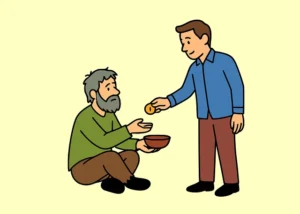 The second mistake that must be corrected is a lack of generosity. We live in a time of economic trouble. Things are very stagnant. People are struggling. There’s a lot of talk of inflation, job loss, financial ruin, and currency devaluation. What happens is people begin to develop fear regarding their mindset of money, and that fear causes them to grip, to hold, and to not want to release.
Now, this does not mean you shouldn’t save money, or that it’s bad to invest, or that there aren’t times when you should withhold when someone asks of you. There are times when giving money to someone isn’t the best solution. But having said all that, we do also have to develop a mindset of extravagant generosity. Paul writes to the Corinthians regarding taking an offering in 2 Corinthians 9:6, using an analogy about money.
How would you like to get to a place where your bills are paid, where you’re not having to choose between the utility bill and the cell phone bill, or between a certain item you need in the category of medication or food? Where you have everything that you need to live, enough for groceries, utilities, car insurance, all of it? And then at the end of the month, not only do you have enough for all of your bills, but you can save some, because investing is a biblical concept. You also have enough to say to your neighbor, “I see that you were having trouble paying for your groceries this month or this week,” or to go to a pastor and say, “Here is a contribution to start an orphanage in another nation.” That right there is biblical prosperity: the ability to give generously.
But first, there has to be a transformation in the heart. As the Scripture says in verse 9, “They share freely and give generously to the poor.” God is the one who gave the resources in the first place. “In the same way, he will provide, that is, meet your needs.” Watch this now: “And increase your resources, and then produce a great harvest of generosity in you.” What a powerful promise. As you learn this biblical principle of generosity, God will add to you, not just for your own sake, but to produce a harvest of generosity in you so that you can always be generous.
It begins by giving. One must first become a giver. That demonstrates to the Lord that he can entrust you with more, because you’re giving of what he’s already given. Everything you have already belongs to the Lord. It demonstrates trust in the Lord, because trust isn’t in money; it’s in the Lord, and therefore you’re liberated to give. Also, this does something in your heart, causing you to become a person who can handle an increase in resources. God is not a vending machine or a genie working on formulas; rather, as you give generously, you are becoming someone who can handle the blessing of God. That development of generosity within your own heart is ultimately signaling to the Lord that he can increase you because you’ve been generous with what he’s given to you.
Mistake 3: Bad Stewardship
Understanding the Importance of Managing Resources Well
Another mistake is bad stewardship. Do you take care of what God has given to you?
Those who practice good stewardship—those who manage their money well—usually have trouble giving generously because they’re more technically minded, intellectual, or line-by-line. The inverse is also true: those who are very generous and freely give their money away are usually not very good stewards. While this is a generalization, believers are called to have all aspects of the nature of God, including the gift of taking care of things, intention, wise planning, and good stewardship.
In Matthew chapter 25, verses 14 through 30, the parable of the talents illustrates a master who goes away on a trip and gives his servants varying amounts of resources. The servants who invested and multiplied their resources were given more. Finally, the servant who did not invest the entrusted funds out of fear of his master and hid them was cast away and reprimanded because of his inactivity with regard to the entrusted things. The servant did not manage and take care of the entrusted thing, which is an image of God.
Avoiding Impulse Buying, Ego, and Living Beyond Your Means
 You have to ask yourself:
- Am I taking care of the resources that God has given to me?
- Am I putting things on a credit card because I don’t know how to say no to my impulses?
- Am I scrolling through social media late at night and using digital pay apps to quickly buy products and junk that I don’t actually need?
- Do I purchase using my ego, buying fancy clothes and cars that I can’t afford?
- Do I live above my means to impress other people and try to get them to think of me as important or wealthy when I’m actually not?
- Am I planning and budgeting, or does money come in and simply get spent as it goes?
Because you can be a generous giver, and that’s wonderful, but if you’re not practicing good stewardship, no increase is going to come. You have to apply all biblical principles if you’re going to see actual biblical prosperity. If a generous person is blessed with an increase because of generosity, yet does not steward well, their issues will only get worse.
If you earn $30,000 per year and owe $10,000, waiting until you make $100,000 to get out of debt will not work if habits do not change. Your debt will simply grow in proportion to your increased resources. We have to take responsibility for the decisions we make and the situations in which we find ourselves. How you respond to circumstances is totally your responsibility. It is important for us to apply wisdom and live according to our means and plan wisely; it is necessary for us to practice the financial responsibility from the Bible each day, say ‘no’ to immediate gratifications, ego, and the need to impress other people.
Mistake 4: Giving Up Too Soon on Consistency
Consistency is the key to all the other keys.
“Let’s not get tired of doing what is good. At just the right time, we will reap a harvest of blessing if we don’t give up.”
Context considered, the spiritual principle is that if you are consistent in doing something right, godly, and biblical, that consistency will eventually yield results and produce fruit. You cannot say, “Well, I’ve been generous for the last 3 months, but I haven’t seen an increase,” or “I’ve been budgeting for 9 months, and I’m still in debt.” You have to practice things faithfully, consistently, day to day, week over week, month over month, year over year.
It is important for us to persist in all this because these consequences accumulate and increase momentum. You just need to continue giving, being wise with your money, having a biblical perspective on finances, and remaining faithful.
Conclusion and Prayer for Financial Breakthrough
If your situation is difficult and mounting debt hangs over your head, begin to practice good stewardship. Cut what needs to be cut. Evaluate honestly what is a true need versus a want, luxury, or living expense.
Let this be a prayer: Lord, give courage and wisdom to apply all of these principles, and grant a miracle to bring this financial frustration to an end. May you be given the wisdom to identify areas where good stewardship is lacking, the courage to obey when opportunities to give are presented, and the faith to respond without fear. Keep perspectives right, and help individuals to act faithfully so that they may become builders of the kingdom with financial resources, producing a harvest of generosity. In the mighty name of Jesus, we pray. Amen.